
I don't copy and paste AI responses
AI has entered my life. But I’m cheap, so not a paid version.
Initially, I investigated a health issue, but then quickly moved to helping me out with updating my 2013 legacy website code.
It wasn’t perfect, and I went down a few rabbit holes before working out what prompt was needed. AI had a lot of certainty that wasn’t the right approach out here in reality.
Then I checked a few old webpages, written in 2013 or 2015, and realised that rewriting some of these was required.
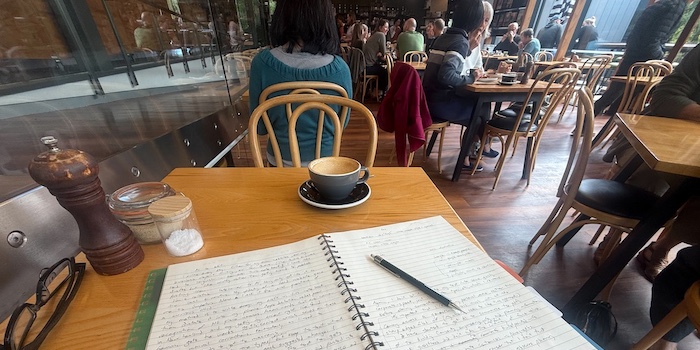
The process was this, and is similar for all my writing. I write the first draft off the top of my head in my A4 notebook freehand. Then I later dictate the base text into Gemini, as it understands Te Reo Māori and New Zealand place names, plus gets 99% or more correct.
I set strict limits, including no changes to the text or “polishing”, no em dashes or semicolons, no superlatives, extreme language, or excessive certainty.
I get it to list any issues, and then I decide what to do with each.
If it’s appropriate, I ask for a fact check and, again, no changes to my text, just another list. Deciding what I accept needs careful consideration, as the AI is often looking at what I write from an American corporate perspective, or from information from other countries that may not apply to New Zealand conditions.
One example is writing an article for my tramping website on the widespread use of the poison 1080 in New Zealand.
Gemini recognised that I was writing for a sceptical 20-something audience with little scientific interest and flagged about 20 issues. That led me to investigate each one, eliminating factual errors. Most turned out to be trivial, but I churned through them, and overall the writing was improved.
No copy and paste was used. I rewrote my text in my own words and peculiar turns of phrase. I don’t want my edges homogenised away.
Then I fact-checked the final draft against the cranky and pedantic ChatGPT, which came up with stray cases, usually from somewhere else or from decades ago, when practice had changed. I ended up spending two days resolving the listed issues, as it had consulted information from DOC PR posts that had been reinterpreted from scientific reports by journalists who didn’t always understand the gist of the science.
The most egregious example was ChatGPT’s certainty about rat population density in New Zealand backcountry forests, where its figures had come from a 35-year-old estimate of the population on Haulashore Island here in Nelson, an island with pine trees and only a kilometre away from the largest fishing port in the Southern Hemisphere.
Eventually, I posted the new webpage, using my words and extensive local knowledge, and did not accept suggestions unchallenged.